This project was a three-person group responding to a brief from the Building Research Establishment. We chose to pursue a sensor-driven system to help prevent the structural damage and health problems caused by condensation damp. As a team we researched condensation damp and its health impacts and then set out to design an electronic system that could monitor humidity in real time and prompt occupants to act before mould could develop.
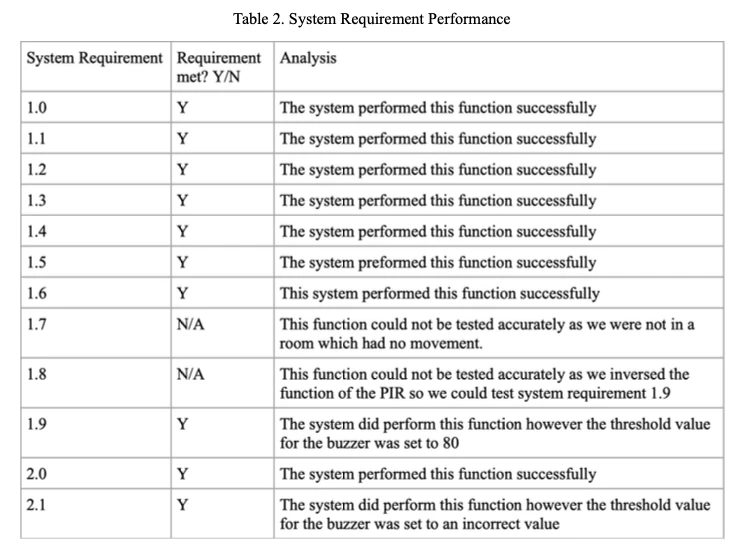
I led system ideation, listing the possible design features, which were subcategorised into alarm system features, display features, and additional features. I then ranked these features and by using a combination of the best features, created three design concepts. We proceeded with concept 3 as it not only alerts the occupants to a damp environment but also takes automatic action by controlling an extractor fan. I wrote the system's functional requirements, which included specific conditions, humidity thresholds, LCD display functions, how fan speed should scale with humidity, occupancy-related behaviour, and the normal operating state of the device. These system requirements were used in the development of the product and to evaluate the product against at the end of the project.
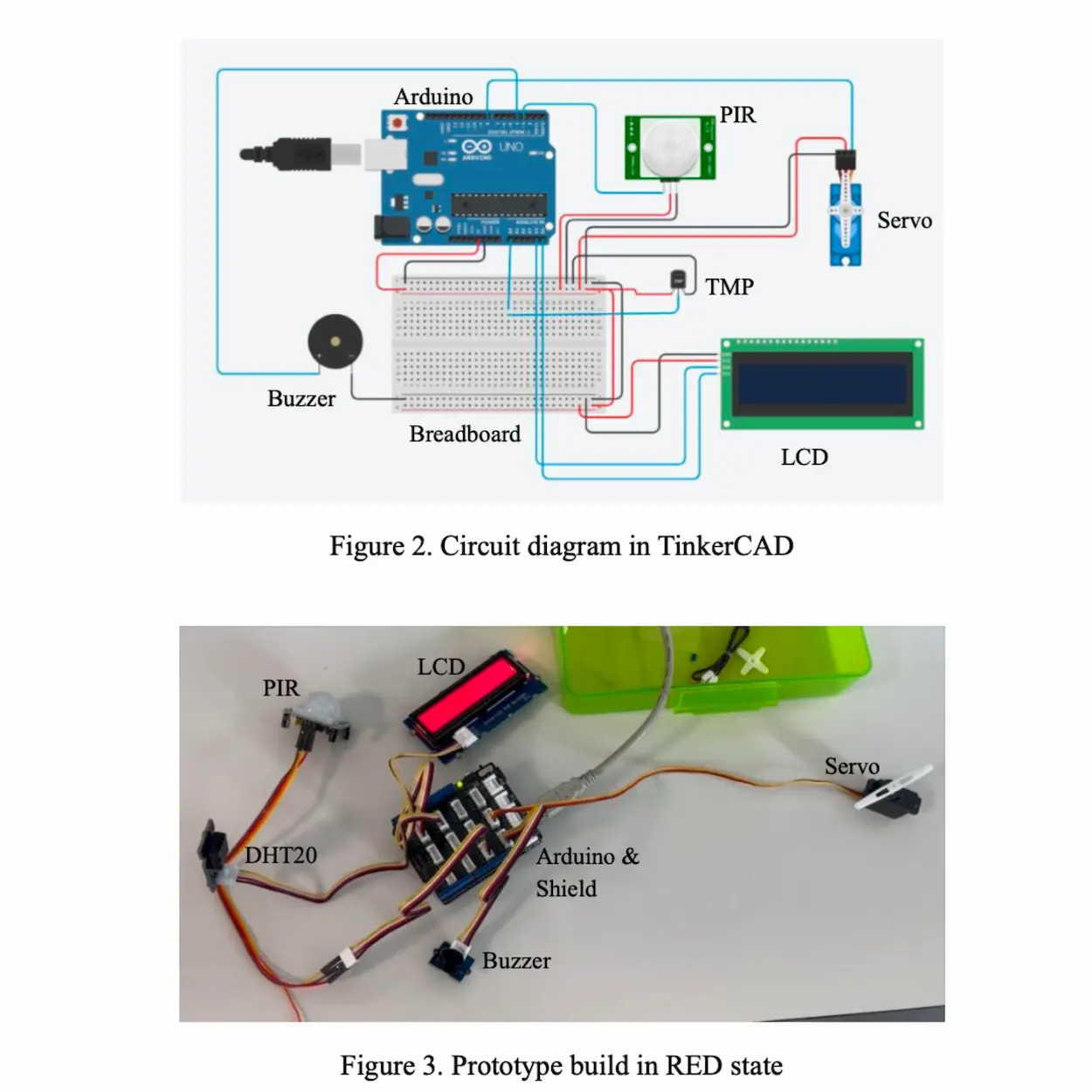
We then built a prototype using a DHT-20 humidity and temperature sensor, a PIR motion sensor, a servo standing as an extractor fan, and an Arduino with an RGB LCD. We then tested our prototype using a truth table and the system requirements that we had previously set out. During this prototyping we found a bug: the buzzer was coded to trigger at 80% relative humidity instead of the intended 60%.
Our prototype succeeded in achieving our goal of monitoring and proactively responding to high humidity events aimed at preventing condensation damp.